
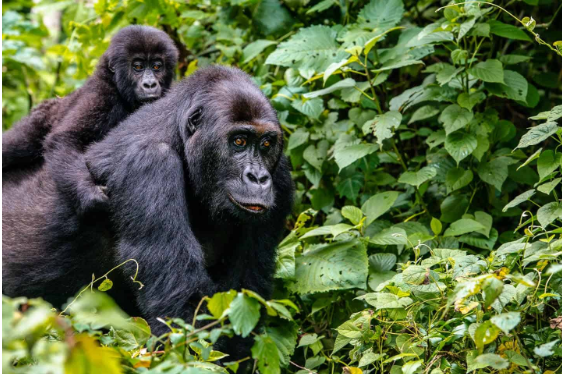
Most travellers assume gorilla trekking needs a week or more of travel. In reality, Kigali, Rwanda’s capital, is one of the most efficient gateways to mountain gorillas anywhere. A 3 days gorilla safari via Rwanda lets you land, trek and fly home with minimal wasted time, whether you track gorillas in Rwanda’s Volcanoes National Park or cross the border to Uganda’s southern Bwindi.
This guide explains both routes, a sample itinerary, costs, preparation and how to choose the option that suits you.
Why Travel via Rwanda?
Fast access. Kigali International Airport is well connected to Europe, the Middle East and the rest of Africa. From there, the gorillas are only a few hours away by road.
Efficient roads. Rwanda’s roads are among the best in East Africa. The drive to the gorilla region is straightforward, scenic and comfortable.
Two country options. From Kigali you can trek in Rwanda or cross into Uganda. This flexibility lets you choose based on budget, terrain and the type of experience you want.
Safe and organised. Visitors often praise Rwanda’s order and cleanliness, which helps on a short trip where every hour counts.
Two Ways to Do a 3-Day Gorilla Safari via Rwanda
Option 1: Gorilla Trekking in Rwanda (Volcanoes National Park)
This is the simplest and quickest route. Volcanoes National Park is about a scenic drive of about three hours from Kigali. The park offers fully habituated families, relatively open bamboo and volcanic terrain and a well-organised permit system.
Permit cost: USD 1,500 per person, set by the Rwanda Development Board, with the price reported to hold steady for 2026/2027.
Trek profile: One comparison notes that treks in Rwanda typically run from 30 minutes to 4 hours. The park has about twelve habituated families, and you spend one hour with your assigned group.
Option 2: Gorilla Trekking in Uganda via Kigali
Many travellers fly into Kigali and drive south across the border to Bwindi Impenetrable National Park’s southern sectors, Rushaga or Nkuringo. This is much shorter than driving from Entebbe. One guide explains that the journey to Bwindi’s southern sectors takes only four to five hours from Kigali, and requires an East African Tourist Visa at $100. Visa rules change, so verify them before travelling.
Permit cost: A Uganda permit is considerably cheaper. One 2026 guide gives $800 per person in the high season, or $600 during the low-season months of April, May and November.
Trek profile: Bwindi is denser, steeper and often more demanding. The same comparison suggests treks there run from 2 to 8 hours, although Rushaga can offer shorter and longer options depending on the family you are assigned.
Which route is better depends on your priorities. Rwanda is faster and more predictable. Uganda is cheaper and offers more families but requires a longer drive and a border crossing.
Sample 3-Day Itinerary: Rwanda Route
Day 1: Arrival in Kigali and transfer to Volcanoes National Park.
Arrive at Kigali International Airport, meet your driver-guide and set off for the Musanze region. If you land in the morning, you may have time to visit the Kigali Genocide Memorial or a local market on the way. Check in at your lodge, relax and attend a briefing on trekking logistics.
Day 2: Gorilla trekking.
After an early breakfast, drive to the park headquarters at Kinigi for registration and the ranger briefing. You are assigned a gorilla family and hike with trackers and guides. Once you find the group, you spend one hour observing and photographing them. After returning, enjoy lunch, a cultural visit or rest at your lodge.
Day 3: Optional activity and return to Kigali.
Depending on your flight, you could add golden monkey tracking or a short cultural visit, then drive back to Kigali for your departure. If you have a late flight, this extra half-day adds a lot of value.
Sample 3-Day Itinerary: Uganda via Kigali Route
Day 1: Kigali to Rushaga or Nkuringo.
Meet your guide at Kigali Airport or your hotel and drive south to the border, with formalities handled in advance by your operator. Continue into Bwindi’s southern sector, where you check in at a lodge and rest.
Day 2: Gorilla trekking in Bwindi.
Brief at the park headquarters, trek with rangers and trackers, and spend an hour with your assigned family. Return to your lodge for lunch and, if energy permits, take an afternoon community walk or Batwa cultural experience.
Day 3: Return to Kigali.
Drive back to Kigali, with time for border formalities. Plan your onward flight carefully, as the journey takes several hours. Many operators recommend an evening flight or an extra night in Kigali.
For travellers who want longer encounters, Rushaga is also the only place offering the gorilla habituation experience, which gives four hours with semi-habituated gorillas for $1,500 per person in a maximum group of four. This requires very early booking and extra planning.
Costs: What to Budget
The permit is the largest cost. Beyond that, a short trip includes:
- Accommodation: One or two nights in the gorilla region and possibly a night in Kigali. One 2026 source lists mid-range lodges at $300 to $600 per night on full board, and luxury lodges at $1,200 to $3,500 or more per night, although Uganda’s southern sectors generally offer more affordable options.
- Transport: A private 4×4 with a driver-guide, or shared transfers.
- Meals and drinks: Often included with lodge stays, but not always.
- Porters and tips: Inexpensive and highly recommended.
- Visa and insurance: Check requirements and ensure your policy covers medical evacuation and permit cancellation.
As a rough comparison, a Rwanda route has a higher permit cost but shorter driving, while a Uganda route has a lower permit but a longer transfer and a border crossing. One 2026 comparison estimates that a seven-day Uganda gorilla safari costs $2,200 to $3,500 per person while a Rwanda equivalent costs $3,500 to $5,500, although a three-day itinerary will cost considerably less than either. Always request an itemised quote and confirm what is included, as prices and rules can change between tariff periods.
How to Choose Between the Two Routes
Choose Rwanda if:
- You want the shortest transfers and the most predictable schedule.
- Your time is very limited.
- You prefer well-established infrastructure and polished lodges.
- Budget is less of a constraint.
Choose Uganda via Kigali if:
- You want to save on the permit.
- You are comfortable with a longer drive and a border crossing.
- You enjoy dense, adventurous rainforest.
- You want the option of the habituation experience in future.
When to Go
Gorillas can be trekked all year. The dry seasons, roughly June to September and December to February, bring firmer trails and are best for easier hiking, but they are also peak periods when permits and lodges sell out early. The wetter months, March to May and October to November, offer lush scenery and fewer visitors, with Uganda offering discounted permits in some low-season months. Since a three-day trip has little slack, secure your permit as early as possible.
Preparing for a Short Trip
- I arrived rested. If you can, land in Kigali a day early, especially if your flight arrives late at night.
- Pack light but smart. Bring sturdy boots, long trousers, a long-sleeved top, a waterproof jacket, gloves, insect repellent and a hat. Pack a small daypack for the trek.
- Build fitness. Prepare with hill walking and stair climbing in the weeks before travel.
- Hire a porter. On a short trip, saving your energy matters.
- Check documents. Confirm visa requirements, passport validity and any health entry rules.
- Protect your trip. Carry insurance that covers medical evacuation and permit cancellation.
Gorilla Rules and Etiquette
- The minimum age is 15.
- Groups are limited to eight visitors, with a maximum of one hour with the gorillas.
- Do not trek if you are unwell, since gorillas are susceptible to human illnesses.
- Keep your voice low, stay about seven metres away and avoid sudden movements.
- Do not eat, drink or smoke near the animals.
- No flash photography.
Choosing an Operator
A well-planned three-day trip depends on tight logistics. Choose a licensed operator with recent reviews, clear pricing and a confirmed permit before full payment. Ask about airport pickup times, border-crossing support for Uganda routes and what happens if your flight is delayed. Check refund and rescheduling policies, and be cautious of prices far below the official permit rates.
Conclusion
A 3 days gorilla safari via Rwanda is one of the most efficient ways to meet mountain gorillas. By using Kigali as your gateway, you cut travel time dramatically and gain a choice of routes: the quick, polished Rwanda experience in Volcanoes National Park, or the more affordable, adventurous Uganda option via Bwindi’s southern sectors. Either way, you get the same remarkable hour with a gorilla family. Book permits early, prepare for the terrain, build in buffer time around flights and choose an operator you trust. With a little planning, three days is all you need.
Key Takeaways
- Kigali is a fast, convenient gateway to gorillas in both Rwanda and Uganda.
- Volcanoes National Park is roughly three hours from Kigali, while Bwindi’s southern sectors are around four to five hours by road.
- A Rwanda permit costs $1,500, and a Uganda permit costs 800(600 in low season). Verify current tariffs.
- Treks last from 30 minutes to several hours, with one hour spent with the gorillas.
- Rwanda is simpler and shorter, while Uganda via Kigali is cheaper but needs a border crossing.
- Book early, protect your trip with insurance and allow buffer time around international flights.
- Follow all etiquette and health rules, and hire a porter.
Frequently Asked Questions
- Can I really do a gorilla safari in three days?
Yes. With a well-timed flight into Kigali, three days is enough for arrival, trekking and return, particularly on the Rwanda route. - Which is better for three days: Rwanda or Uganda via Kigali?
Rwanda is simpler and faster. Uganda via Kigali is cheaper on permits but involves a longer drive and border formalities. - How long is the drive from Kigali to the gorillas?
About three hours to Volcanoes National Park, and around four to five hours to Bwindi’s southern sectors, depending on border time. - How much does a 3-day gorilla safari cost?
The permit alone is $1,500 in Rwanda or $800 in Uganda, with accommodation, transport and extras on top. Request an itemised quote. - Do I need a visa?
Requirements depend on your nationality and route. Check Rwanda and Uganda entry rules, including any East African Tourist Visa options, well before travel. - How long do I spend with the gorillas?
One hour once you reach the family. - How difficult is the trek?
It varies from easy to strenuous. Moderate fitness and a porter make it manageable for most people. - What is the minimum age?
Generally 15 years. - Can I book at the last minute?
It is risky. Permits are limited and sell out, especially in peak months, so book as early as possible. - Can I extend the trip?
Yes. Popular add-ons include golden monkey tracking, Akagera National Park, Nyungwe Forest, Lake Kivu and savannah parks in Uganda.